
New Haven Previous Residents by Era
A backward search works best when each record has a clear role. For a New Haven address, the deed index tracks transfers, city directories offer time-stamped name and address lines, the census groups households, and maps explain a lot or street number that no longer looks familiar. The New Haven City Clerk, rather than a county recorder, holds municipal land records because New Haven County is a geographic and historical label only. Start with the present parcel, then choose the source that reaches the period of interest. A current owner search and an old directory line are useful together, but neither alone proves who lived at a house.
| Source | Years It Covers | Where Held | What It Shows |
|---|---|---|---|
| SearchIQS land index and images | July 26, 1951 to present in current help; older PDF says August 18, 1952 to present | Online and City Clerk | Grantor, grantee, document, book/page, date, image and legal description |
| SearchIQS maps | January 1, 1835 to present in current help | SearchIQS and City Clerk | Street, lot, subdivision, map and legal references |
| NHFPL city directories | 1840 to about 1990; complete microform 1840 to 1960; address sections about the 1920s onward | Ives reference collection | Listed names, addresses, occupations, spouse and business clues |
| Library of Congress telephone reel | 1878 to 1899 metadata; localities and years vary within the reel | Library of Congress digital collection | Telephone, name, home or business marker, address, image and OCR |
| Federal census | 1790 to 1950 public under the 72-year rule | National Archives and approved genealogy access | Household relationships, ages, birthplace and address-area clues |
| Sanborn and HAER maps | 1886, 1901, 1923, 1951 and 1973 sets identified | Library, archives and map repositories | Building footprint, material, use and street-number context |
| Building permits and certificates | Current online era varies; older records may be offline | CitySquared, Building Department or FOIA | Work, inspection, permit and certificate dates or names when public |
| Newspapers and obituaries | New Haven Register, 1871 to 2019, plus other local runs | NHFPL and Chronicling America | Death, move, business, civic, estate and address notices |
Use the deed and map rows for a parcel that exists today. Use directories and census schedules for people who occupied an address in an earlier period. The source table keeps previous residents research tied to the right era. When a chain reaches an unscanned book, shift to the City Clerk counter, library microfilm, the State Library or Archives, a museum finding aid, or a Connecticut FOIA request. The record trail is spread across these custodians, not gathered in one master index.
Note: The current SearchIQS help page and older PDF give different first land-record dates, so record which coverage statement supported each conclusion.
Tracing New Haven Past Owners Through Deeds
Anchor the modern parcel before searching for past owners. The Vision New Haven database supports owner-name, property or address, and parcel or property lookup. Save the owner, parcel key, situs and mailing addresses, assessment year, legal location, and any map reference. Then check the City GIS viewer for the parcel shape and nearby lots. GIS supplies map context, not a deed or survey.
The SearchIQS New Haven land-record portal is the separate grantor and grantee index, with a documented Map Index by Street for older map-first research. Keep its parcel trail beside the modern Vision and GIS notes so a street number change does not break the chain.
- Anchor the current parcel in Vision and GIS, keeping the situs address separate from the mailing address.
- Search the owner as grantee in SearchIQS and narrow the result by the period or record category available.
- Inspect the deed image or index line for parties, date, instrument, book/page, consideration if shown, and legal description.
- Search the seller as the prior grantee, then compare the lot, bounds, map reference, and other legal identifiers.
- Try name variants, entities, releases, mortgages, liens, maps, and the street map index when a name-only match breaks.
- Separate deed dates from directory dates, and pair the legal description with a Sanborn sheet, tax record, permit, or household source.
- Grantor / grantee
- The grantor transfers an interest in land. The grantee receives it. Their roles show which direction to search.
- Chain of title
- The linked sequence of transfers and recorded references that shows how an interest moved from one party to another.
- Legal description
- The lot, block, bounds, subdivision, map or book/page reference that identifies land when a street number changes.
- Situs address
- The mapped location of a parcel. It is different from the mailing address used for owner correspondence.
- Criss-cross directory
- A reverse address section that turns a street number into a listed person or business for a particular year.
- Enumeration district
- The census area assigned to an enumerator. It helps match an old household to the right neighborhood or ward.
New Haven SearchIQS Coverage and Gaps
SearchIQS is the digital starting point for the part of the New Haven deed trail that has been indexed and imaged. Its current help material places land records from July 26, 1951 to the present, while an older City Clerk or SearchIQS PDF starts August 18, 1952. Maps reach January 1, 1835 in the current help statement. The difference is a source-date conflict, not proof that one book is missing. Keep the citation beside the result and ask the City Clerk when a book, image, or cutoff is unclear.
The guest index is the no-login route. Images can require an account or subscription, and the research notes a $2 per image download or print charge under the unlimited plan. The City Clerk remains the fallback for earlier volumes, certified copies, and image questions. SearchIQS inner controls were not exposed in the inspected HTML, so a reliable account of the trail should name only the documented grantor, grantee, index-book, map, and image functions.
The New Haven SearchIQS coverage reference is represented in the linked capture below.
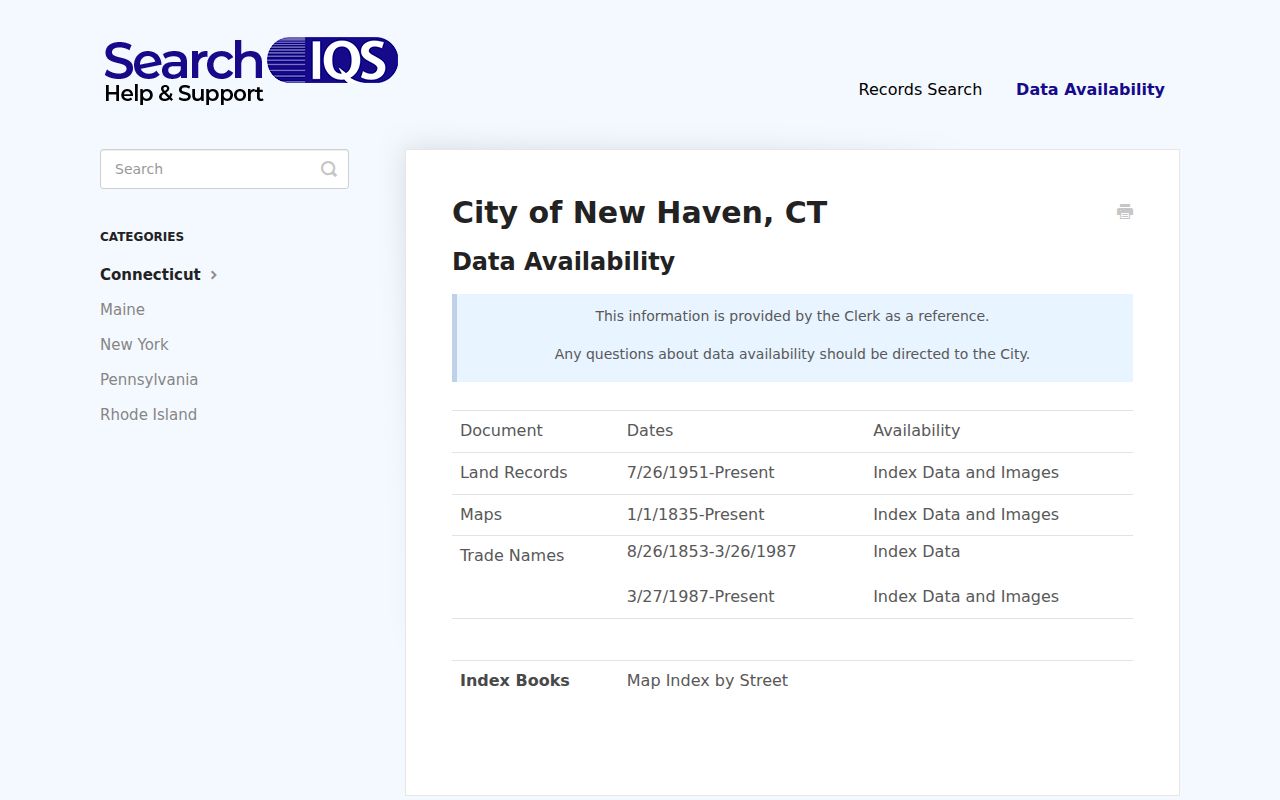
The capture gives the land and map dates used to place an online deed result inside a longer New Haven house-history search.
New Haven House History Directory Shelf
The New Haven Free Public Library city-directory guide identifies a deep local run, from 1840 to about 1990. Complete microform covers 1840 to 1960, later books are strong from the 1880s to about 1990, and most volumes were issued by Price and Lee. Reverse or address sections reach back about the 1920s. The Ives Main Library reference area at 133 Elm Street holds the material, and the guide lists 203-946-8130 for the library. Staff can help with the shelf, but a complete remote scan of the run is not promised.
Read a directory entry as a dated lead, not a census. The alphabetical section may add an occupation, spouse in parentheses, or alternate address. The reverse section can turn a street number into a listed occupant or business, while the business section can identify an owner or manager. For previous residents, compare adjacent editions, then test the name against a deed, newspaper, probate file, or census schedule. An absent line does not prove that a person left New Haven, and a listed line does not prove ownership. The collection itself is described in the New Haven city directory reference.
Note: A reverse-directory line names what the publisher listed at one address and year, not every person who may have lived there.
New Haven Maps Explain Old Addresses
New Haven’s Green and Nine Square Plan make intersections, wards, and historic-square references important clues. The Green sits at the center of the half-mile grid, with George, York, Grove, and State among the older street references. The 1748 Wadsworth Plan adds early creek and canal context. These maps help translate an old description before it is compared with a modern parcel. They are geography aids, not owner lists.
New Haven research did not locate a verified official year for a street renumbering. When an old number fails, try the intersection, ward, adjacent street, SearchIQS Map Index by Street, legal bounds, lot or block, and the nearest Sanborn sheet. The 1886 New Haven Sanborn volume and later sets identified for 1901, 1923, 1951, and 1973 can show a building footprint, material, use, and number context. A map can explain physical change, but it does not prove who owned or occupied the building.
Past New Haven Households: Directories and Census
Directories and census schedules answer a different question from a deed. A directory records a publisher’s snapshot of a named person or business, while the federal census groups people by household and enumeration district. Public census schedules run from 1790 through 1950 under the 72-year rule as of the research date, but old city and county boundaries do not always match modern New Haven. Treat the census address as an area clue, then use the directory street and number to narrow the house.
- Write down the old street spelling, number, ward, and whether the directory marks a house or business.
- Start with the earliest reverse or address section available for that year and note adjacent numbers or cross streets.
- Check the alphabetical section for occupation, spouse or household clues, initials, and another address.
- Match the period to a census year and verify the likely enumeration district, household relationship, age, and birthplace.
- Pair the result with a dated deed, map, permit, newspaper, obituary, or probate record and label the confidence of the match.
Local notices can close a household trail. NHFPL offers an assisted obituary search beginning five days after a death date, with a stated one to two week turnaround and no guarantee. The research notes a $10 plus copy fee for New Haven residents and $20 plus copy fee for non-New Haven requesters. For an heir or estate lead, the Connecticut Probate Case Lookup has useful online coverage from January 5, 2011 forward, with earlier material incomplete. A case index is a lead, not the full probate file.
Note: Keep the census geography, directory year, and deed date together because each record measures a different kind of connection to an address.
Older New Haven Records Beyond the Web
When the online deed run or a directory shelf leaves a gap, New Haven house history shifts to assisted research. State Library vertical files hold family and town files, clippings, obituaries, biographies, town histories, and Barbour corrections. Museum finding aids add court, city and county documents, cemetery, fire, preservation, school, and organization records. These are targeted collections, not a promise that every former resident has an indexed file.
The Connecticut State Library vertical-file route is shown in the linked capture.
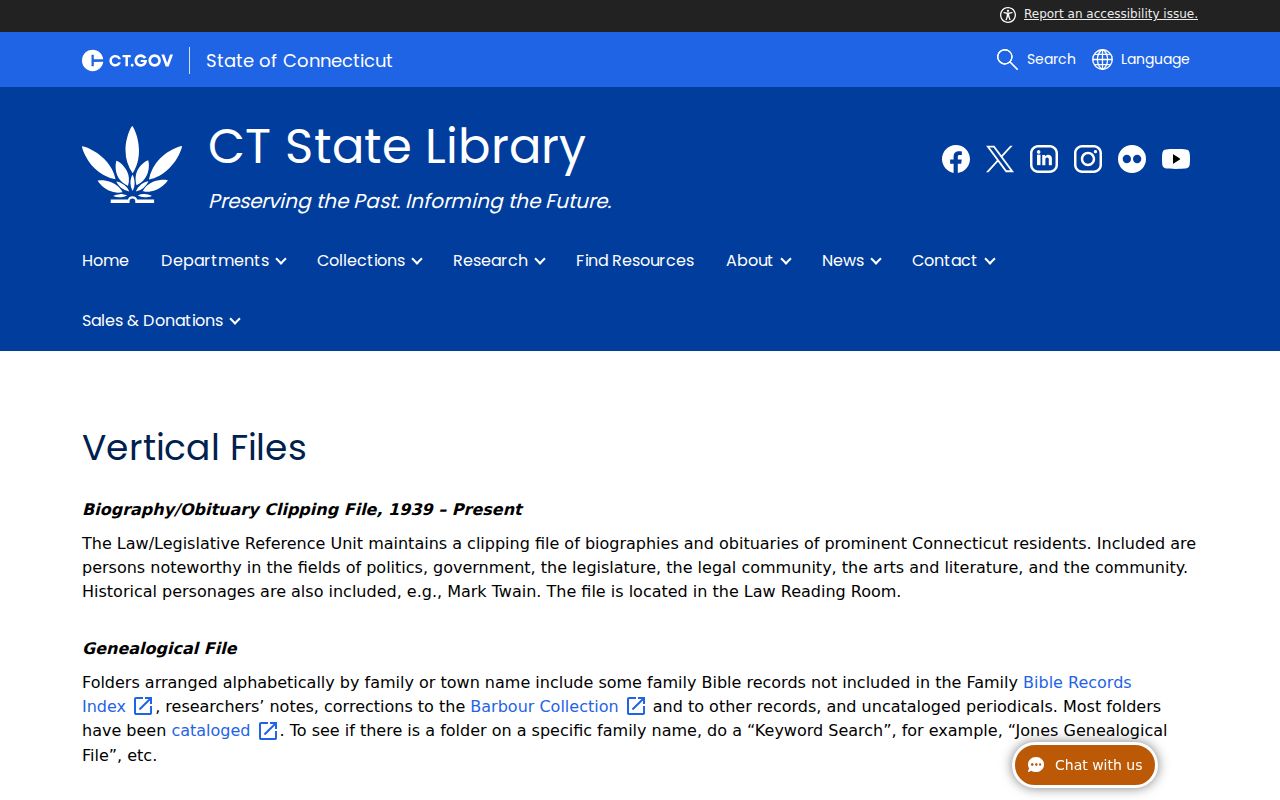
The image points to family, town, obituary, biography, and local-history material that can supply a name or date missing from a deed search.
The Connecticut State Archives access page is another documented route for historical records and indexes.
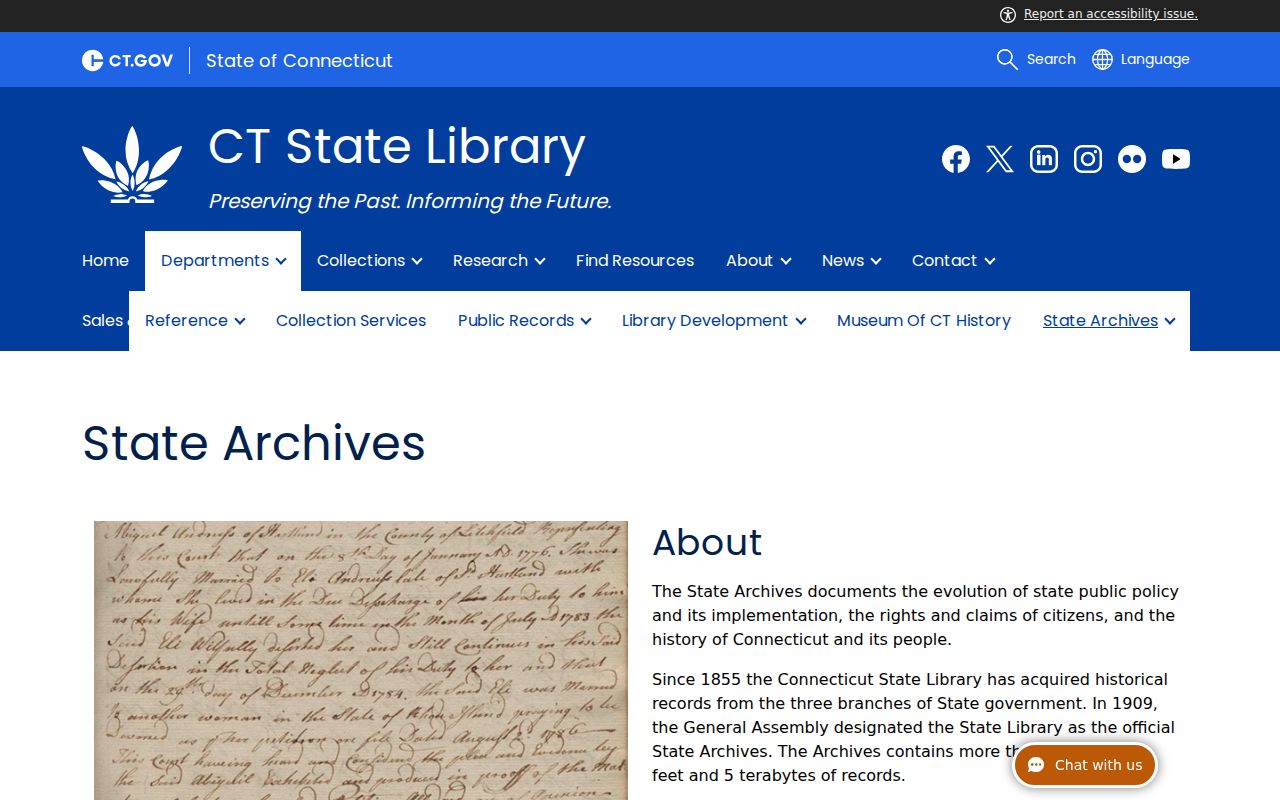
Archives access varies by record group. The research also notes that some offsite records may be unavailable until late spring 2026, so check the live notice before planning a visit.
New Haven Memory Map and Property Alerts
The NHFPL and Yale Beinecke Memory Map, identified as a March 16, 2026 project, adds a current community-archive route for uploading, digitizing, and preserving local photographs and documents. It can supply a house image, family paper, or neighborhood memory that points toward a date or former occupant. Submission and rights terms should be checked on the live project page. Memory Map material complements deeds and directories; it does not replace the legal description or establish title.
The New Haven Memory Map project is represented in the linked capture below.
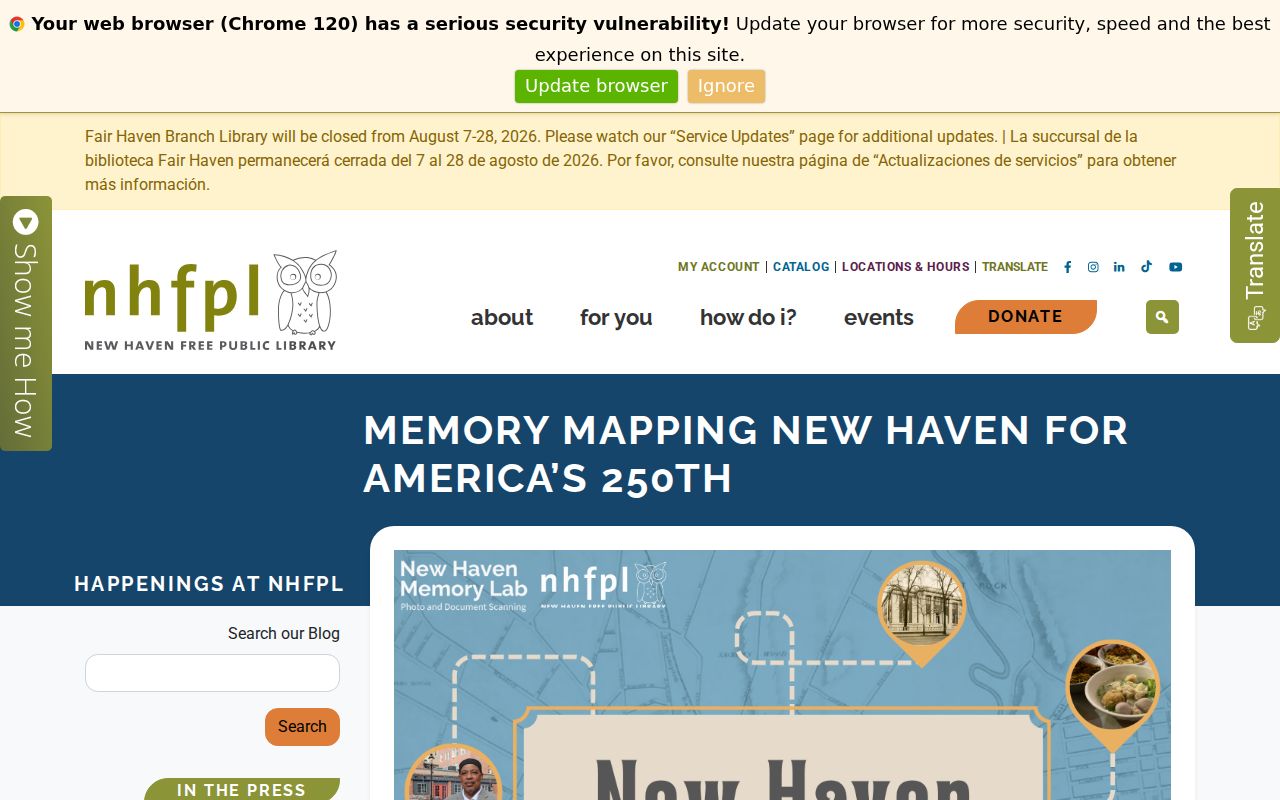
The capture shows the community-preservation route, which can add local photographs and documents beside the formal New Haven record trail.
For a current property warning, the September 5, 2025 New Haven City Clerk alert directs owners to SearchIQS Fraud Alert. The form asks for a location, e-mail, and up to ten last or company names with first names, then sends an e-mail when a document records under a monitored name. It is a notification layer, not a title guarantee. Verify any notice with the City Clerk and the official land record.
New Haven Previous Residents and Privacy
A missing name in a previous residents search can reflect a record limit rather than a failed search. Connecticut’s Address Confidentiality Program, effective January 1, 2004, gives an eligible participant a substitute mailing address unrelated to the actual address. A separate voter privacy program can keep a protected name and address out of the ordinary registry list. Public records may also redact Social Security numbers and other protected data under state law. Do not try to reconstruct a protected address from a directory, deed, map, obituary, or another source.
Use the minimum fields needed for family history, an heir question, a dated house-history project, or a personal record correction. Keep the public-record date and the source URL, but do not treat an owner, directory line, court party, or obituary as proof of a current occupant. When the evidence conflicts, ask the original custodian, such as the City Clerk, library, Archives, court clerk, assessor, or DPH, rather than filling a gap with a guess.
Lawful personal use. New Haven previous-resident research belongs in house history, genealogy, and personal curiosity. Do not use an address, obituary, deed, or voter result to threaten, follow, repeatedly contact, or intimidate anyone; Connecticut stalking and harassment laws apply.