
Find New Haven Residents by Record Type
A New Haven residents directory is best treated as a set of public-record trails. An assessor entry can tie a titled owner to a parcel. A voter record can show registration, district, party, status, birth year, and participation history within Connecticut’s rules. A deed index shows parties to a land instrument, not every person who uses a building. A library directory can place a household at an address during a past year. These are useful leads, but each describes a different role and date.
Start with the narrowest question. If the clue is a street, anchor the situs parcel before searching names. If it is a person, keep the full name, initials, age or year, and known town together. If it is family history, move quickly to the New Haven Free Public Library, newspapers, probate, and vital-record eligibility rules. A missing result may mean a record is protected, not that the person never lived in New Haven.
- Search the Vision New Haven property database by the name or address already known, then save the parcel, situs, owner, mailing address, and assessment context.
- Use the Connecticut voter lookup for the official registration and polling-place route, while remembering that it is not a complete household roster.
- Move from the parcel owner to the New Haven City Clerk’s SearchIQS land-record index; grantor and grantee roles, legal descriptions, and book/page references matter more than a name alone.
- For an older address, use the library’s city directories, reverse sections, newspapers, and maps. Pair a directory line with an independent record before treating it as a household fact.
- When a record is not indexed or the online result is incomplete, make a focused Connecticut FOIA request to the office that holds it, naming the department, date range, address, and preferred delivery method.
Where New Haven Resident Records Are Kept
New Haven County has no active county clerk, county recorder, or county elections counter. Connecticut counties have been geographic names since 1960. For current land and local vital work, the correct stop is the New Haven City Clerk. The assessor, tax collector, and registrars are city offices; courts, probate, and vital-record systems split into separate state or judicial channels.
New Haven City Clerk
200 Orange Street, Room 202
New Haven, CT 06510
203-946-8339
New Haven Assessor
165 Church Street
New Haven, CT 06510
203-946-4800
Vision property database
New Haven Registrar of Voters
200 Orange Street, Room 201
New Haven, CT 06510
203-946-8035
The City Clerk’s general hours are listed as Monday through Friday, 9:00 a.m. to 5:00 p.m.; land-record recording ends earlier, at 4:00 p.m. SearchIQS supplies a guest index for covered land records, while the counter remains important for certified copies, older books, maps, and questions about an image. The assessor is a public reference source, not a deed or survey. The voter office can explain local list access, protected records, and the difference between a polling lookup and a file request.
Pair New Haven Vision and Parcel Records
The Vision New Haven welcome screen sends a researcher into the online database through an “Enter Online Database” control. The landing page confirms owner-name, address, and parcel research, but the inner ASP.NET form loads dynamically. Exact labels, partial-match rules, result counts, sorting, ZIP filters, and export controls were not exposed in the unattended capture. Treat those as live-screen questions, not promises.
The assessor’s Grand List is tied to an October 1 assessment date. The 2021 revaluation notice says the values reflect October 1, 2021 fair market value and warns that online values may omit exemptions or penalties. Use the city GIS viewer to check the mapped polygon and adjacent lots. The strongest first record is the combination of owner, situs location, legal location, assessment year, and parcel geometry.
The Vision welcome-screen capture below shows the public entry point and its revaluation context.
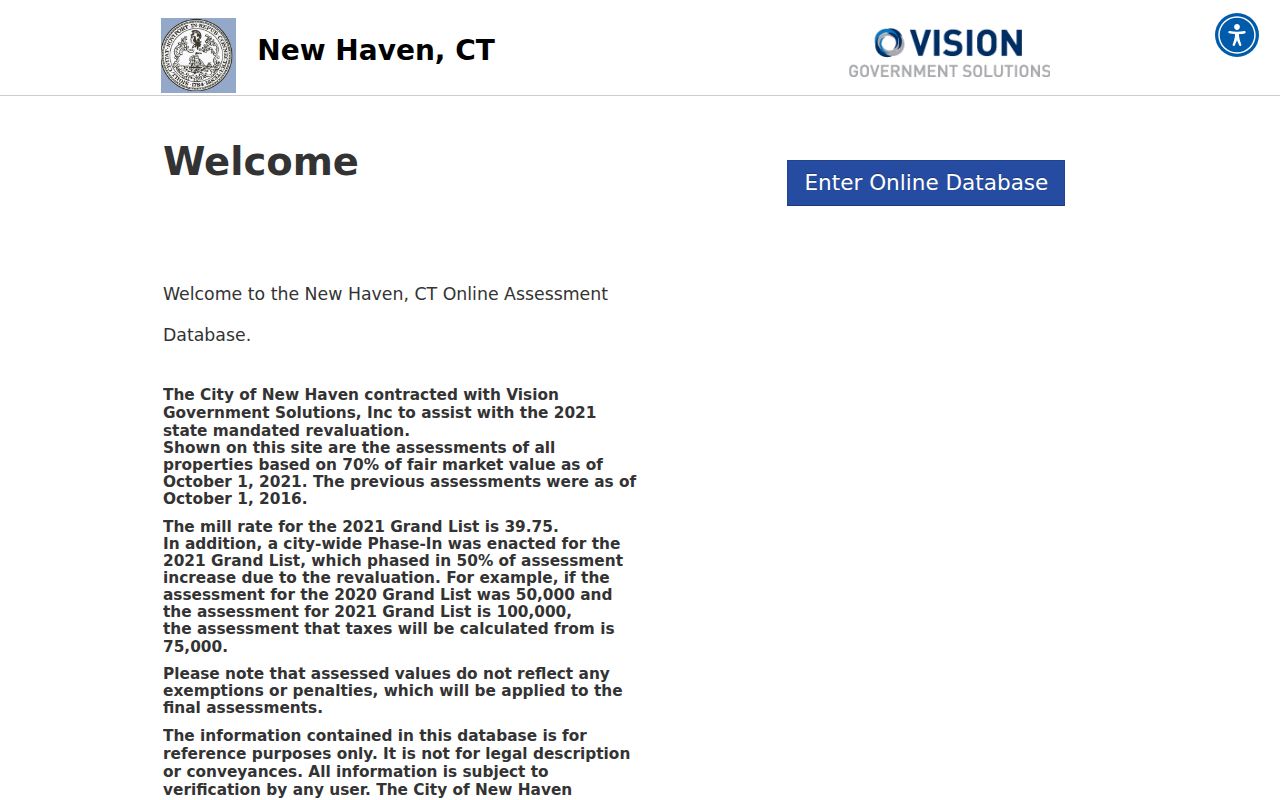
After entry, record only fields that the live parcel card actually labels. A mailing address can point to a different town or state, while the situs address remains the place where the parcel sits. Neither one is a list of all people connected to the property.
| Portal item | What the research confirms |
|---|---|
| Owner or name mode | Owner-name research is supported; exact field label and partial-match behavior were not captured. |
| Property or situs address | Address lookup is supported; house-number and street-field layout remains a live-screen gap. |
| Parcel or account key | A parcel/account mode is expected, but the New Haven format was not located in official sources. |
| ZIP filter and result controls | ZIP-capable searching, paging, sorting, print, and export were not exposed before database entry. |
New Haven's Current Resident Directory Sources
Current directory-like sources do not all list residents. The distinction protects the meaning of a search result. An owner record is not proof of occupancy; a voter line is limited to registered electors; a staff contact card is a work contact; a community meeting page is not a membership roster. Use the source that answers the question, then add a second record with a matching date and place.
| Source | What it may identify | Keeper | Access and limit |
|---|---|---|---|
| Grand List / parcel card | Titled owner, situs, mailing address, value fields | New Haven Assessor | Vision and GIS reference; not a household census |
| Voter registry | Registered elector, district, party/status, participation | New Haven Registrar / SOTS | Public fields subject to Title 9 and privacy programs |
| Deed and map index | Grantor, grantee, instrument, legal description | City Clerk / SearchIQS | Guest index; images and certified copies have separate routes |
| Tax search | Property location, bill number, account and tax status | Tax Collector | Name, location, or bill search; payment fees are separate |
| Staff directory | City employee, title, department, phone | City of New Haven | Contact index, not residence evidence |
| Community umbrella | Neighborhood meeting, chair, specialist, map | Community Management Team | Public civic route; no complete private roster located |
For one person, the New Haven resident lookup workflow keeps those roles separate. For a street or a block, use the address-focused pages rather than turning a name list into an assumption about everyone at a parcel.
The state’s free eLicense lookup adds professional credential context. Its fields include license type, status, name, number, and address filters when released. A credential or business address shows a public professional connection, not a home address. The captured eLicense field view below shows that official-context search surface.
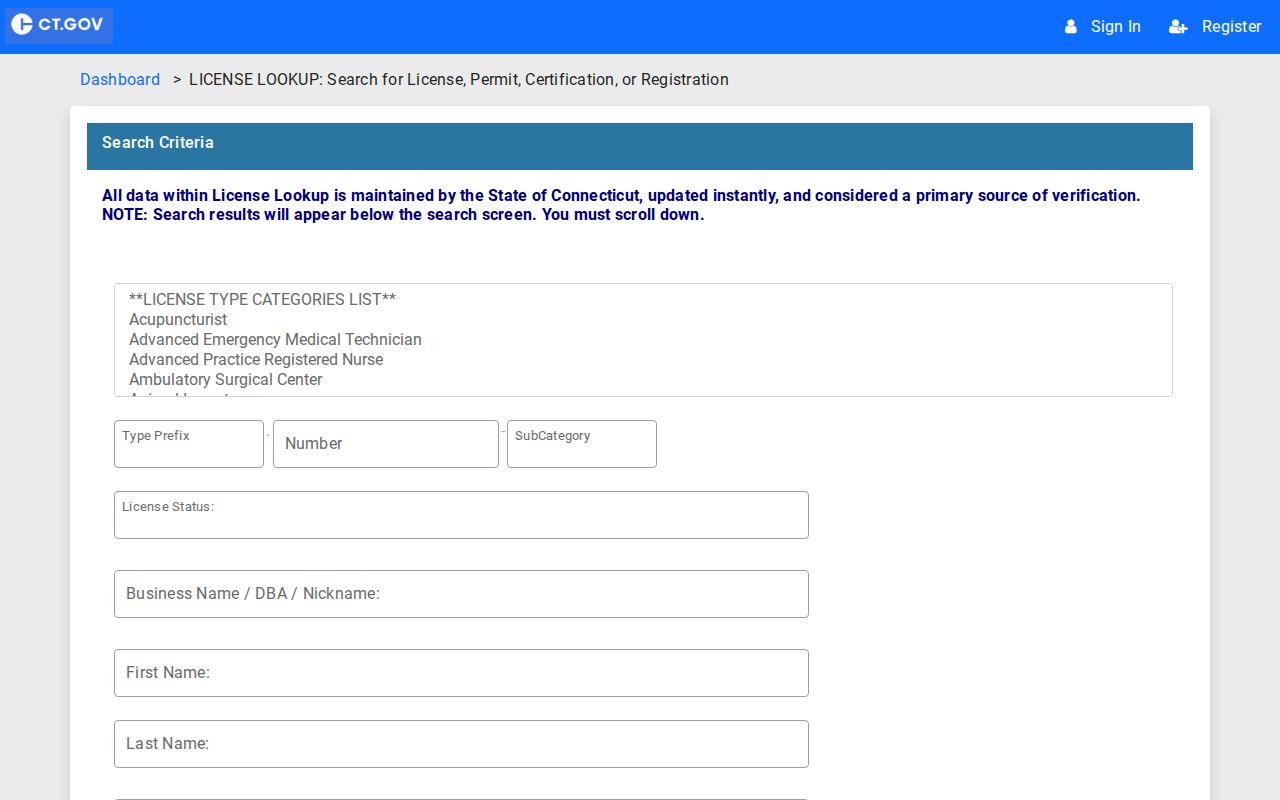
Use the result date and the issuing board’s detail view when citing a license. Keep occupational context tied to the record’s stated purpose instead of treating it as a personal directory.
What New Haven's Voter Lookup Can Show
New Haven registrars maintain the local list inside Connecticut’s centralized voter system. Ordinary public-file fields can include name, residence street and ZIP, district or precinct, party affiliation, active or inactive status, birth year, and election participation. Month and day of birth are exempt under PA 26-1 §96. Driver-license and Social Security fields are not public, and a ballot choice never appears.
The official Connecticut voter and polling lookup rejected the unattended capture, so its exact controls and result layout remain a documented gap. The fallback is the New Haven Registrar at 203-946-8035. A full voter-file request goes to the Secretary of the State, costs $300, arrives as CSV, and requires a permitted election-related, scholarly, journalistic, political, or governmental purpose certification. The form bars harassment, advertising, solicitation, sale, marketing, reproduction, and unapproved personal or private uses.
The public voter lookup screenshot is useful as an endpoint reference, not as proof that every current field will display.
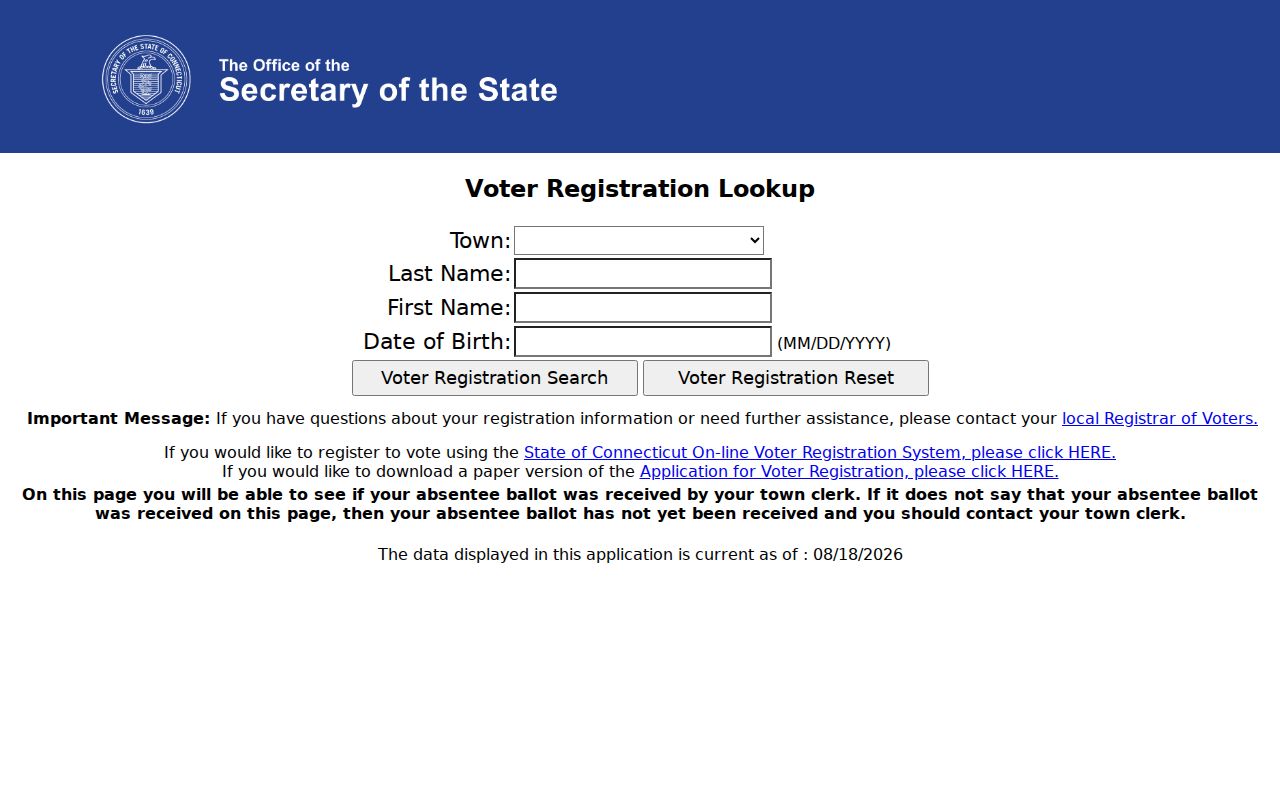
Voter records can confirm registration at a recorded date. They do not identify every person at an address, and ACP or §9-50(d) protections can suppress a name or street number.
Court and Probate Records, New Haven
Connecticut’s court systems answer case questions, not the broad question of who lives in New Haven. The Superior Court New Haven Judicial District is at 235 Church Street. Its civil and family party search can use a last name, optional first name or initial, court location, docket number, or a separate property-address mode. A public result may show case number, parties, attorneys, motions, docket events, scheduled dates, and status. It is an index, not the official file.
The Connecticut Probate Case Lookup covers decedent’s estates and trusts through case type, district, status, first name, and last name. New Haven Probate District PD-38 is the local route. Useful result columns include case number, last name, first name, middle initial, type, and district. Online data is useful from January 5, 2011 forward, but earlier material is incomplete. Ask the clerk which permitted papers can be viewed. Federal cases take a separate route through PACER and the District of Connecticut courthouse. Criminal and motor-vehicle cases use a defendant search with last-name prefix, first initial, birth year, year range, court location, and category. Sealed, juvenile, protected, and aged-out matters may not appear. Confirm an identity through role, date, and geography before treating a match as the right person. The civil inquiry screenshot below shows the public index surface.
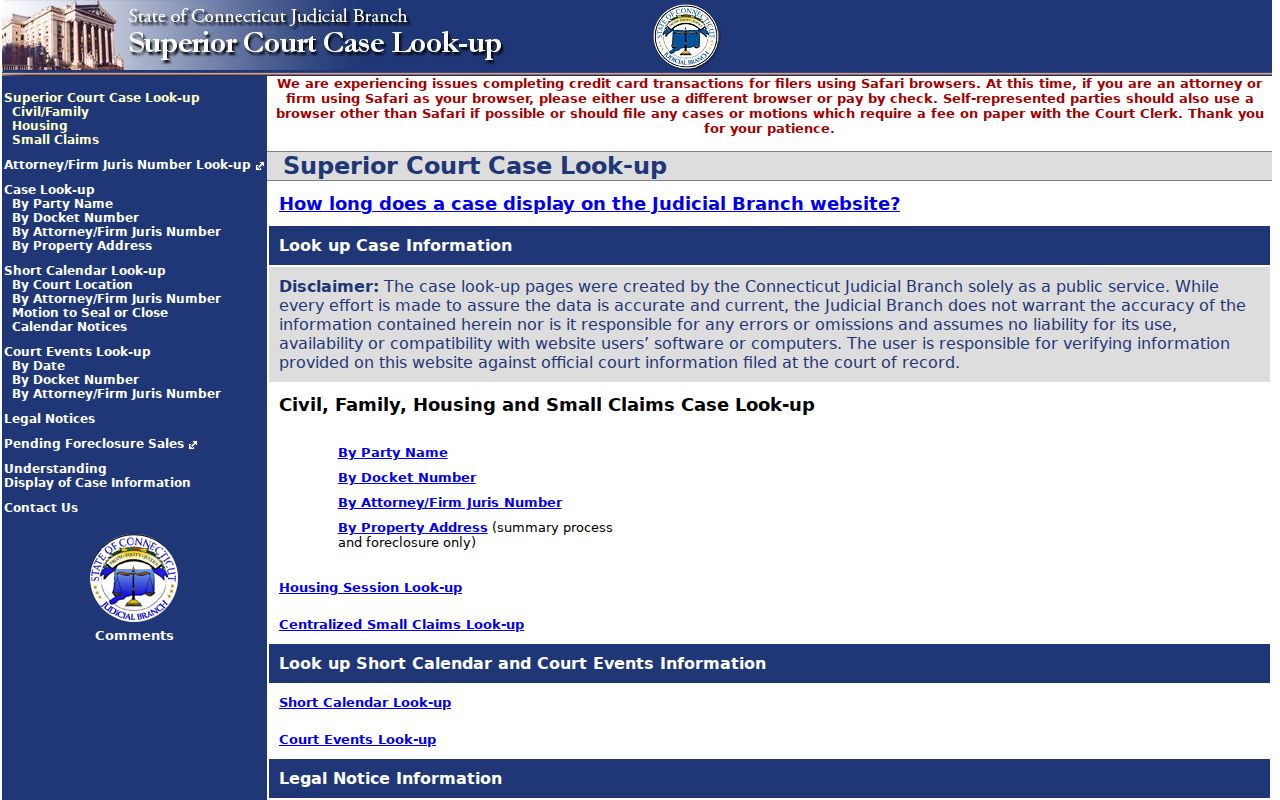
There is no New Haven County jail roster in the official research. The Connecticut DOC inmate search is a separate daily-updated state custody tool using DOC number, name, and date of birth. Its result changes over time and is not a general resident roll. The state custody endpoint is shown below for readers who need that narrow record type.
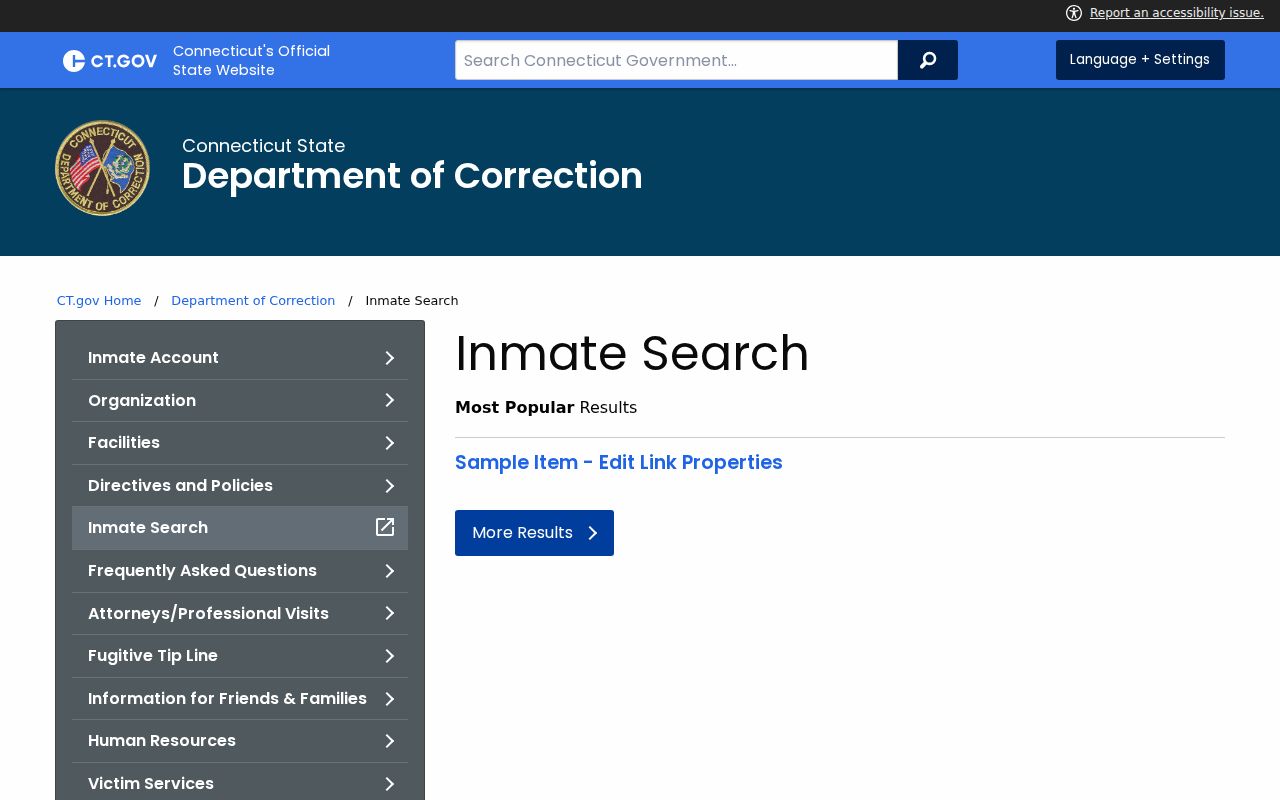
Use the agency’s current result and confirm status with the custodian. A name match alone is never enough.
New Haven Vital Records Have Different Windows
New Haven’s local registrar issues certified copies for events held in the city, while the Connecticut Department of Public Health supplies statewide routes. Current vital records are not an open name directory. Birth certificates are confidential for 100 years under CGS §7-51, with eligibility rules for the person, close relatives, authorized representatives, genealogists, and other listed requesters. Births from 2003 forward have broader town-choice rules than earlier births.
Death and marriage or civil-union certificates are generally available to a person age 18 or older under CGS §7-51a. Social Security numbers and other protected fields remain restricted. Town and state copy fees are generally $20 for death and marriage records; state birth copies are listed at $30. DPH accepts mail, in-person, and approved VitalChek routes, and processing can take up to 12 weeks. Divorce decrees stay with the Superior Court that granted them.
The DPH vital-record forms hub is the starting point for applications, IDs, relationship proof, payment, and submission instructions. If the record is not available through a permitted copy route, use the library’s historical indexes, newspaper runs, or a focused request to the custodian rather than assuming a current public index exists.
Earlier New Haven Residents in Directory Books
The New Haven Free Public Library holds city directories from 1840 through about 1990. Complete microform coverage runs from 1840 through 1960, with strong later book coverage, mostly Price & Lee. Reverse or address sections reach back about to the 1920s, though the exact section varies by volume. Start at Ives Main Library, 133 Elm Street, and ask the Local History Librarian how the year and format are arranged.
A directory entry can show a listed name, occupation, spouse notation, address, business, or telephone detail. It is a dated snapshot, not a census and not proof of title. Search the alphabetical section after finding an address entry. Then pair the line with a deed, map, obituary, newspaper, probate case, or census schedule. The New Haven city directory collections page carries the full shelf and reading method.
The Library of Congress also has a digitized Connecticut telephone-directory reel covering localities and years from 1878 through 1899. Inspect the locality heading and image because the reel is not a single New Haven roster. NHFPL’s newspaper microfilm adds the New Haven Register from 1871 through 2019, along with other local runs and a paid obituary search service. A notice can anchor a move, death, business, or relative to a date, but it still needs a second source.
New Haven ZIP Codes and City Lines
A ZIP code is a mail-routing layer, not a New Haven parcel line. USPS, Census ZCTAs, wards, neighborhood labels, GIS polygons, and deed legal descriptions can disagree while referring to the same place. ZCTAs 06510, 06511, 06512, 06513, 06514, 06515, 06517, and 06519 intersect New Haven differently. Some ZIP references reach adjacent towns, Yale or institutional routes, or post-office groupings.
Use the USPS ZIP Code Lookup to validate a complete street address, city, and state. Its three modes are address, city and state, and cities by ZIP. USPS warns that a returned ZIP does not confirm a person or business and is not a legal boundary. For property research, match the situs address to the assessor and GIS. A mailing ZIP can belong to the owner’s correspondence address instead.
ZIP granularity is most useful after an address is anchored. It can narrow a property or tax search, but it cannot prove that a person lives in a city, belongs to a neighborhood, or appears in a voter file.
New Haven Record Requests and FOIA
The Connecticut Freedom of Information Act, CGS §§1-200 through 1-243, is the fallback for city records that are not indexed online. Anyone may make an oral or written request, and New Haven encourages its online form. A focused request names the record, department, date range, address or parcel, and preferred delivery method. The city may clarify, review exemptions, charge copying costs, or require prepayment over $10.
The Connecticut FOIA compilation explains access, copies, fees, arrest-record access, and residential-address nondisclosure. The New Haven form accepts e-mail, mail, fax, online, or telephone delivery choices and electronic, printed, or in-person inspection preferences. A response within four business days can be treated as a denial under FOI Commission guidance, but that is not a promise that the records will be produced in four days.
The request form screenshot shows the fields that were visible during capture.
Use the New Haven FOIA request form when it fits the record. FOIA does not override sealed, confidential, safety, personal-data, or other statutory exemptions.
- Identify the custodian, such as the City Clerk, Assessor, Building Department, Registrar, police Records Division, or a state office.
- Describe one record type and a bounded date range. Include a parcel, street, case number, or name only when it helps locate the file.
- Choose inspection or a copy format, ask for an estimate when fees may exceed $10, and keep the request and acknowledgment.
- If access is denied or delayed, preserve the dates and appeal to the Connecticut Freedom of Information Commission within the stated period.
New Haven Record Layers
A good New Haven residents directory search is a chain of small answers. The assessor says who is listed with a parcel. GIS says where the polygon and neighboring lots sit. The deed index says who granted or received an interest. A directory says who was listed at an address in a particular year. The voter roll says which registered electors and participation fields are releasable. Courts, probate, vital records, and licenses add role-specific evidence.
- Roll
- A list maintained for a defined purpose, such as assessment, taxation, or voter registration. It is not a list of everyone in a household.
- Index
- A finding aid that points to a record. SearchIQS can point to a deed image, while the index itself is not the full instrument.
- Parcel
- A mapped piece of land with a legal location. Its situs address and an owner’s mailing address can be different.
- Criss-cross directory
- A reverse or address section arranged by street and number, useful for finding a listed name before checking the alphabetical section.
Official records and paid record-compilation services also answer different questions. The latter may combine public indexes and purchased data into stale or wrongly merged reports. A fee does not make a result official. The safer comparison is the source’s custodian, date, role, and correction route.
| Source type | Strength | Limit to keep visible |
|---|---|---|
| Custodian record or official index | Clear office, record role, date, and correction path | May be incomplete, protected, dated, or limited to one purpose |
| Library or archive collection | Historical context, scans, finding aids, and local interpretation | Usually requires in-person work, an appointment, or assisted search |
| Commercial compilation | May gather several public leads in one report | May be stale, mismatched, incomplete, or subject to a separate opt-out process |
New Haven's Current Records Keep Changing
Recent local initiatives add useful routes but do not replace the custodians. In September 2025, the City Clerk publicized a property-fraud alert tied to SearchIQS. The alert can monitor a location and up to ten name combinations, then send an e-mail when a document records. It is a notification service, not a title guarantee. In March 2026, NHFPL and Yale introduced Memory Map for preserving local photographs and documents; rights and submission terms should be checked before reuse.
A May 2026 Freedom of Information Commission decision involving CitySquared describes a public parcel permit and application database and highlights why portal completeness should be tested against the city’s office or FOIA route. Vision 2034 is another current planning milestone, but planning material should be read as neighborhood context rather than as a resident index.
Connecticut’s Big List unclaimed-property search is a separate, free name lead. It covers assets held by the Treasurer, not a person’s New Haven address. The captured state search screen is shown here.
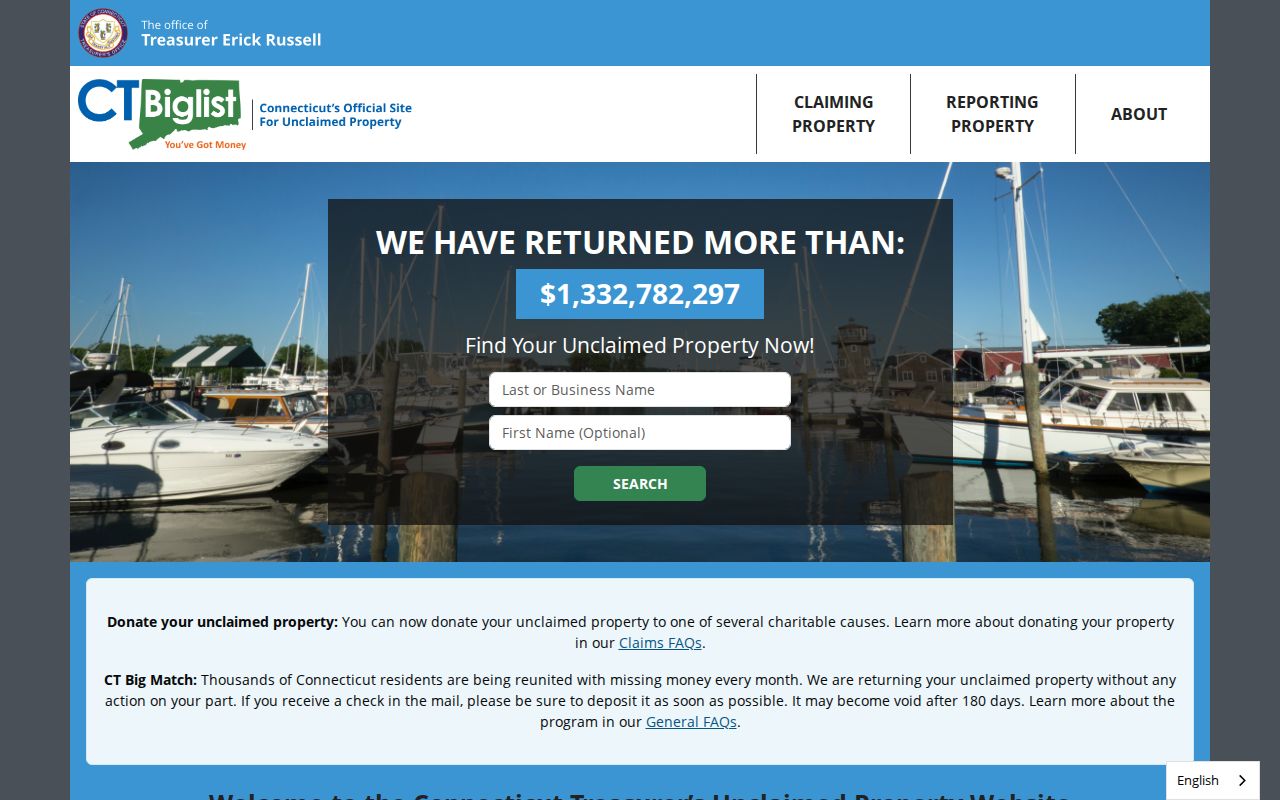
Claims require verification with the Treasurer. Treat the result as a prompt for the official claim process, never as current residency proof.
Use New Haven Records With Care
Connecticut’s access rules create deliberate gaps. The Address Confidentiality Program supplies a substitute mailing address and protects the actual address for approved participants. A separate voter privacy statement under CGS §9-50(d) can keep a name or street number from the ordinary registry list. FOIA exemptions, sealed court matters, protected vital fields, and redacted land images also limit what can be copied.
Use only the minimum information needed for family history, reconnection, an heir question, civic research, or a property record you have a lawful reason to check. Save the public record date and source URL. Do not copy Social Security numbers or try to reconstruct a protected address from another record. If a parcel is wrong, contact the Assessor. If an image or index is wrong, contact the City Clerk. Registrar, court, DPH, SOTS, and probate offices each have their own correction route.
Personal, lawful use matters. New Haven public records are not an invitation to threaten, follow, repeatedly contact, or intimidate anyone. Connecticut stalking and harassment laws, voter-file certifications, DPPA limits on motor-vehicle data, and custodian privacy rules all apply. Stop when a record is protected or a person asks for no contact.
A reliable residents directory search ends with the right custodian, a dated record, and a clear statement of what that record does not prove. That standard keeps a useful local lead from becoming a false identity claim.